It was 30th September 2015, when Russia entered the bloody and complex Syrian Civil War – started in 2011 – on the request of Syrian President Bashar al-Assad. A lot of local, regional and international powers were engaged in this fierce battle already. Islamic State of Syria and Levant (ISIL) was expanding its own regime by territorial gains in Syria. Al-Qaeda was also present. Syrian Democratic Forces, Free Syrian Army, Syrian Turkmen Brigades and Jaysh al-Islam were trying to topple Bashar al-Assad. United States (US), Turkey, Saudi Arabia, United Arab Emirates (UAE) and Qatar were to wipe off ISIL. And Iran, Iranian backed Hezbollah, along with Bashar al-Assad’s Army were to defend Bashar al-Assad regime and quell rebellion at any deadly cost.
Showing posts with label Jawad-Akram. Show all posts
Sunday, December 3, 2017
According to United Nations (UN), more than 270,000 Rohingya Muslims have fled violence to Bangladesh since 25th August when Myanmar Army launched brutal crackdown on Rohingya Muslims in Rakhine state after the alleged attack of Arakine Rohingya Salvation Army (ARSA) on Police Outposts, killing 12 people.
A UN official told on Friday that more than 1000 people may already have been killed in Myanmar (formerly called Burma), mostly minority Rohingya Muslims.
Myanmar’s government has not given any opened access to International journalists to verify independently the facts and figures but the military atrocities told by Rohingya Muslims reaching Bangladesh reflect much higher number of casualties and miseries as compared with the UN figures. Beheadings, slaughtering, rapes, and arsons are at rampage in Rakhine state by Myanmar Army and Buddhist Vigilantes. ‘Ethnic Cleansing’ or ‘Genocide’ of Rohingya Muslims is going on officially in a well planned manner, according to Rohangiyas reaching Bangladesh for shelter. Now the reports are emerging that Myanmar Army is laying landmines near Bangladesh border to add miseries to the escaping Rohingyas. Capsizing of the boats of fleeing Rohingyas, in rough waters, is also causing scores of persons to drown.
The Myanmar government denies all these convictions but the massive exodus of Rohingya Muslims and their condition itself not only contradicts Government’s official stance but also proves a lot of things.
The response of the international community is disappointing, and totally mismatching the severity of this humanitarian crisis. Massacre of Rohingya Muslims is repeating the incidents of Srebrenica massacre of Bosnian Muslims, in 1995, by Serbian Army when around 8000 Muslims were mercilessly killed. At that time, NATO had led Peace support Military operations in Bosnia and Herzegovina worked a lot in controlling further casualties, but at this time no military operation by any organisation, like NATO, or by any country seems to be on the table.
Despite US and EU embargo on selling arms to Myanmar, which was until recently under military rule, Israel has continued sale of weaponry to the Burmese junta after intensified violence against the country’s Rohingya Muslim minority. One company, TAR Ideal Concepts, has also trained Burmese Special Forces in northern Rakhine state, where much of the violence is taking place, posting pictures on their website of its staff teaching combat tactics and how to handle weapons.
Most of the countries, including Muslim countries, are paying only a lip service to the cause of the Rohingyas. They are either silent or just condemning the Myanmar government, especially de-facto leader of Myanmar, a Nobel peace prize laureate, Aung San Suu Kyi.
Muslim countries vying for Muslim world’s leadership i.e. Saudi Arabia and Iran have not shown much concern about Rohingya crisis. Only Turkey has raised strong voice for the Rohingya. Turk President Recep Tayyip Erdogan has urged Bangladesh to open borders for Rohingyas, and announced to bear the expenses of refugees in Bangladesh. Turkey’s first lady Emine Erdoğan and a delegation including Turkish politicians and heads of Turkish aid agencies also arrived in Bangladesh Thursday to visit a refugee camp hosting Rohingya Muslims fleeing violence in Myanmar’s Rakhine state.
The Independent Human Rights Commission (IPHRC) of the Organization of Islamic Cooperation (OIC) has strongly condemned human rights violations against Rohingya Muslims.
Though unofficially, Bangladesh is not comfortable with this huge influx of refugees but there are reports that a lot of local Bangladeshis are trying to help the refugees with food, clothes and anything they can provide them.
All these efforts can only help the refugees up to a certain limit. To stop Myanmar from these atrocities, great powers of world like United States, Russia and China have to jump into the picture immediately as we saw in the Operation Deliberate Force (1995) when NATO lead air strikes on Serbian military installments were conducted after Bosnian genocide.
Jawad Akram
It has become a tradition to put all the blames of issues of healthcare system on doctors. A war like situation is presented on all forums whenever doctors go on strike. Nobody cares to understand the problems they are facing. A massive rhetoric is launched against them to put a blanket on shortcomings of healthcare system. There might be incidences of negligence or misconduct on part of a few doctors but to put the blame of entire malfunctioning of healthcare system on doctors is not only unjust but also condemnable.
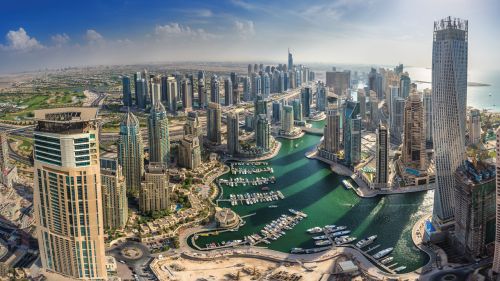
It was 2nd. December 1971, a new country on the map of world appears – United Arab Emirates (UAE). Nobody at that time knew that this small country will rise to the glories of the world. It was, no doubt, a great vision of a great leader – His Highness Sheikh Zayed bin Sultan Al- Nahyan, the founding father of UAE, that turned this Land of Sand into The Land of Dreams.
His Highness Sheikh Zayed bin Sultan Al-Nahyan
At the time of unification of these emirates, albeit oil exploration and export had started but by and large, there was only sand, hot and harsh climate in this area. In fact, people in world considered this region uninhabitable. The only source of earning of its inhabitantswas fishing and finding pearls from sea.
Abu Dhabi in 1950s
It was a glorious decision of unification of all emirates by rulers of that time which changed the fate of people of this land and brought a new dawn of success, progress and prosperity for them. Feeling pride about their forefathers is right for current generation of Emiratis because they are harvesting a gold crop sowed by those visionary leaders of that time.
Rulers of all Emirates at the times of unification
UAE has grown from a backwater hamlet to the Middle East’s most important economic hub. It has developed an excellent blend of eastern and western cultures while maintaining its own traditions.Butto build skyscrapers in deserts, gather over two hundred nationalities in country and make this multicultural society a role model of cohesion was not an ordinary task. This marvelous journey of transforming UAE into a vibrant country is the outcome of fine planning and sincerity of Sheikhs of all emirates under the leadership of HH Sheikh Zayed bin Sultan. They set brilliant examples of honesty, hard work, dedication and determination for others to follow.
A look at today’s Dubai – UAE
Today, people from all around the globe vie to reach UAE for living and earning,because the current rulers of UAE are also reflecting the legendary traditions of Sheikh Zayed era. UAE has been a Land of Opportunities since it came into being. A lot of people came here with only a few dirhams in pocket and by hard work and honesty, they rose to become millionaires and billionaires. These success stories show how much opportunities this land offers.
Importance of humaneness in the eyes of HH Sheikh Zayed bin Sultan is reflected in his famous saying, “No matter how many buildings, foundations, schools and hospitals we build, or how many bridges we raise, all these are material entities. The real spirit behind progress is the human spirit, the able man with his intellect and capabilities.”
The kindness and generosity of Sheikh Zayed was not restricted to UAE only. He used to donate uncountable money and resources for the betterment of humanity all over the world, especially to the improvished countries. His projects in different countries are still providing relief to the poor ones; especially hospitals established by him are the greatest gifts for poverty-stricken people.
These great virtues of UAE, its leaders and citizens oblige people throughout world to say, “Long Live UAE.”
Jawad Akram
![]() |
| By Jawad Akram |
The Sino-Indian war of 1962, which resulted in India’s humiliating defeat, was conceded by then Brigadier John Dalvi as the ‘Himalayan blunder’. During the war, Dalvi was the commander of the Indian seventh Brigade, which after the defeat led to his capture by the People’s Liberation Army (PLA) of China on Oct 22nd 1962. In his book The Himalayan Blunder, Dalvi openly narrated the causes that led to the shameful defeat of India. And with no end in sight, the current tensions between India and China in the Bhutan tri-junction may repeat history.
The row between Beijing and New Delhi began in June when China tried to construct a road in its disputed area with Bhutan, the Doklam Plateau in Tibet, which doesn’t have any land contact with India. Delhi, however, perceived this as an unacceptable change to the status quo with potentially serious strategic ramifications, leading to the Indian army trespassing into the area. No bullets were fired but the Indian army stopped China from building the road. It is a strange coincidence that the main pretext of the Sino-Indian 1962 war was also on the issue of a disputed Himalayan border and one of the triggers was a road construction in Aksai Chin. The two countries have around 3,488-km-long common border, most of which is disputed amongst them.
According to India, it intervened at Thimphu’s request. New Delhi is not willing to leave the territory, while Beijing has set a precondition for dialogue that Indian troops must leave the area. In an article in the Global Times, Long Xingchun, an analyst at the Chinese think tank and the director of the Centre for Indian Studies at China West Normal University, criticised India’s move. “Even if India were requested to defend Bhutan’s territory, this could only be limited to its established territory, not the disputed area. Otherwise, under India’s logic, if the Pakistani government requests, a third country’s army can enter the area disputed by India and Pakistan, including India-occupied Kashmir,” said Xingchun.
China has made it clear that there is no room for negotiations and its foreign policy is reflected in the reporting of its official press agency, Xinhua News Agency. The agency in its recent commentary said that India could face “embarrassment” if it does not withdraw its troops and the situation could get “worse”. In fact, the row took another dimension when Xinhua News Agency’s commentary brought the Ladakh region into the discussion. It said, “India should not regard the existing situation as the same as or even similar to the previous two standoffs in 2013 and 2014 near Ladakh, a disputed area between China, Pakistan and India in southeastern Kashmir. Diplomatic efforts led the troop’s frictions there to a well-arranged end. But this time it is a totally different case.” It is rare for China to call Ladakh a “disputed” region and make a reference to Kashmir.
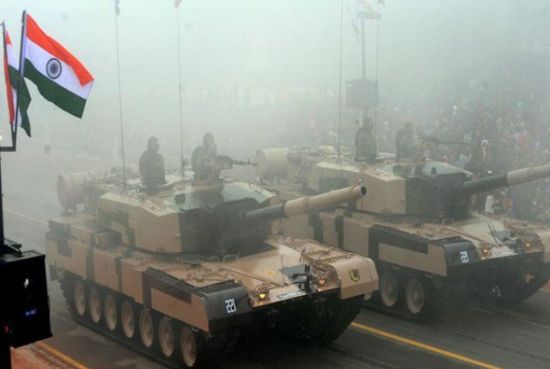
Though Indian Foreign Minister Sushma Swaraj claimed that the border standoff between India and China has not escalated further, amid the ongoing row with the Indian army in Doklam, China held an 11-hour military drill close to the borders of Arunachal Pradesh. With China flexing muscles, the Indian army also test fires howitzer guns at Pokhran.
With fears of a military conflict mounting between the two nuclear-armed neighbours, if India stubbornly adheres to its current stance, then it may have to face a second episode of the ‘Himalayan blunder’, which will be worrisome for the whole South Asian region, including Pakistan.